


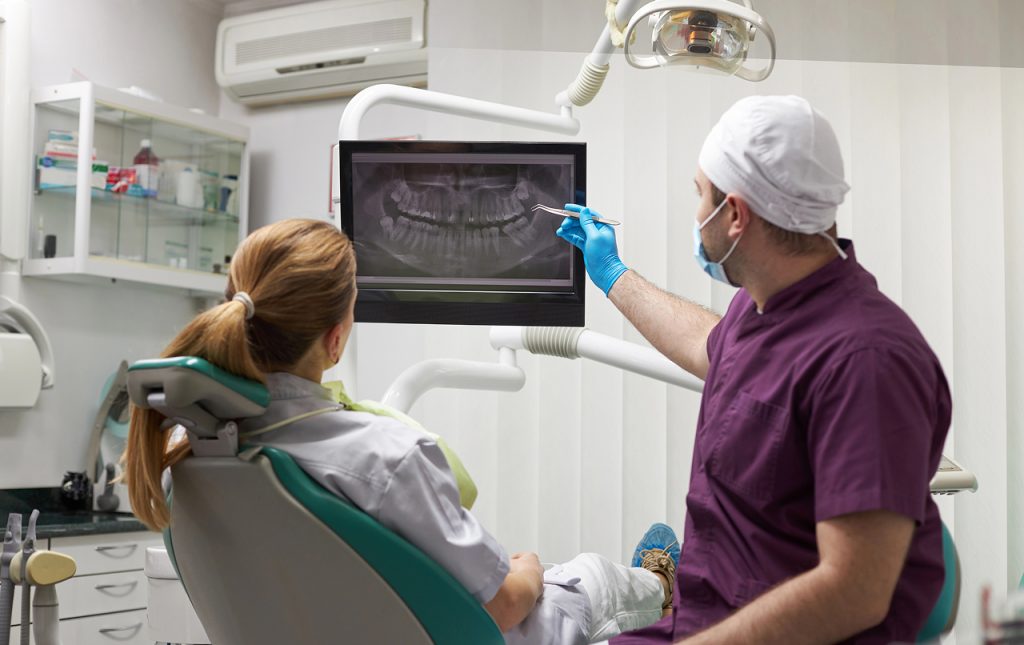
Routine dental X-rays are often viewed as a simple checkpoint in a dental visit, but their real value lies in how they quietly reshape the timeline of disease. Many oral health issues begin long before they are visible or painful, developing in hidden spaces between teeth or beneath existing restorations. X-rays shift dentistry from reaction to anticipation, allowing problems to be identified when they are still biologically small and far easier to manage.
What Are Dental X-Rays and How Do They Work?
Dental X-rays are diagnostic images that allow dentists to see structures beneath the surface of the teeth and gums that cannot be evaluated with a visual exam alone. They work by using a controlled, low dose of radiation that passes through the mouth and is absorbed differently by various tissues. Hard structures like teeth and bone appear lighter on the image, while softer areas appear darker, creating a detailed map of what is happening below the surface.
What is often overlooked is that X-rays don’t just show problems—they show relationships. They reveal how teeth support each other, how bone is changing over time, and how small shifts in alignment or density may signal early imbalance long before symptoms appear.
Why Routine Dental X-Rays Are So Important for Preventive Care
Routine dental X-rays are important because they reveal changes in the mouth that develop silently over time, long before pain or visible damage appears. One of their most overlooked roles is showing the “pace” of disease—how quickly decay, bone loss, or infection is progressing compared to previous visits. This allows dentists to understand not just what is happening, but how fast it is happening, which directly affects treatment timing. They also help uncover early breakdown in areas that tend to hide problems, such as between teeth or under old fillings. In preventive care, this makes X-rays less about finding damage and more about catching subtle shifts before they become structural problems.
Common Misconceptions About Dental X-Rays
- Many people believe dental X-rays are only necessary when something feels wrong, but this overlooks how most dental problems begin silently. Pain is often a late-stage signal, meaning damage has already progressed before any symptoms appear. X-rays are designed to detect these earlier stages when intervention is simpler and less invasive.
- Another common misconception is that dental X-rays expose patients to high levels of radiation. In reality, modern digital X-rays use extremely low doses, often comparable to a short airplane flight or a day of natural background exposure. What is less discussed is how exposure has decreased dramatically over the past decades due to advancements in digital sensors and focused imaging.
- Some patients assume X-rays are repetitive or unnecessary at every visit. However, the purpose of routine imaging is not to repeat the same view, but to track change over time. Small differences between images can reveal early bone loss, shifting teeth, or developing decay patterns that would otherwise go unnoticed.
- There is also a belief that if teeth look healthy, X-rays are not needed. This ignores the fact that many issues develop between teeth, under existing fillings, or below the gumline—areas that cannot be seen visually during an exam.
- Some people worry that dental X-rays are unsafe during routine care, but what is often missed is that safety protocols are designed around individualized need. X-rays are recommended based on risk factors, not habit, meaning healthy patients may need them less frequently while higher-risk patients benefit from closer monitoring.
- Another overlooked misconception is that dental X-rays only focus on teeth. In reality, they also provide insight into jawbone density, sinus positioning, and overall structural balance of the mouth, which can influence long-term treatment planning in ways patients rarely consider.
How Often Should You Get Dental X-Rays?
The frequency of dental X-rays is not based on a fixed schedule, but on how your mouth changes over time. What is often overlooked is that timing is more about risk patterns than routine visits. Someone with a stable history of healthy teeth may need X-rays less often, while others with previous decay, gum disease, or ongoing dental work may benefit from more regular imaging. Another important factor is how quickly changes are occurring beneath the surface. Dentists use X-rays to compare progression, not just to capture a snapshot. Age, lifestyle, oral hygiene habits, and even stress-related grinding can all influence how often imaging is recommended, making it a personalized part of preventive care rather than a standard rule.
Dental X-Rays for Families: Why They Matter at Every Age
Dental X-rays play a different but equally important role at every stage of life, and what is often overlooked is how they help connect oral development across generations within a family. In children, X-rays can reveal how teeth are forming and whether there is enough space for proper alignment long before orthodontic concerns become visible. In adults, they help track cumulative wear patterns that build slowly over time, often influenced by stress, grinding, or past dental work. For older patients, X-rays provide insight into bone stability and long-term structural changes that are not always visible during a routine exam. This makes them a quiet but powerful tool for understanding how oral health evolves within the context of family history and aging.
Understanding the Value: Cost vs. Long-Term Savings
The cost of dental X-rays is often viewed as an added expense, but what is rarely considered is how they function as a form of financial prevention rather than a service cost. X-rays help identify problems at a stage where treatment is typically simpler, less invasive, and significantly less expensive. A small area of decay found early may require a minor filling, while the same issue left undetected can progress into a root canal or extraction. Another overlooked aspect is how routine imaging reduces uncertainty in treatment planning, which helps avoid unnecessary procedures or repeat visits. Over time, this early detection creates a compounding effect where small investments in diagnostics prevent larger, unexpected dental expenses.
Conclusion
Routine dental X-rays play a quiet but essential role in maintaining long-term oral health by revealing changes that are not visible during a standard exam. They help identify early signs of decay, bone loss, and structural shifts, allowing issues to be addressed before they become more complex or costly. When used thoughtfully, X-rays support a more complete understanding of how your oral health is evolving over time.
If you would like to learn more or schedule an appointment, visit us or call (954) 787-6469 to speak with our team.